The Growing Demand for Smart Warehouse Automation
As logistics, e-commerce, retail, and manufacturing industries continue expanding, warehouses are facing increasing pressure to improve operational efficiency while reducing labor costs and storage space limitations.
Traditional warehouse operations often struggle with:
● Low storage density
● Slow pallet handling
● High forklift traffic
● Labor shortages
● Inventory management complexity
To solve these challenges, more companies are adopting smart warehouse technologies that combine Radio Shuttle Racking with AS/RS (Automated Storage and Retrieval Systems).
This collaborative solution integrates high-density storage with intelligent automation, helping warehouses achieve faster inventory movement, better space utilization, and higher operational accuracy.
How Radio Shuttle Racking Works in Smart Warehouses
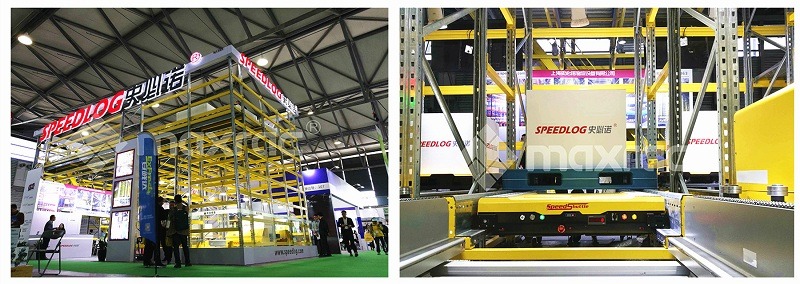
Radio Shuttle Racking is a semi-automatic or fully automated pallet storage system that uses shuttle carriers to move pallets inside deep storage lanes.
Unlike traditional drive-in racking systems, forklifts no longer need to enter storage lanes directly. Instead, radio shuttles automatically transport pallets to designated storage positions.
The system mainly includes:
● Shuttle carts
● Deep lane racking structures
● Rails and guide systems
● WMS/WCS software
● Forklift or conveyor interfaces
Because forklifts remain outside the racking structure, Radio Shuttle Racking significantly reduces rack damage, improves safety, and increases storage density.
This system is especially suitable for:
● Cold storage warehouses
● Food and beverage distribution
● Manufacturing logistics
● High-volume pallet storage
● E-commerce fulfillment centers
The Collaborative Advantage of AS/RS and Radio Shuttle Racking
Modern smart warehouses increasingly combine AS/RS technology with Radio Shuttle Racking systems to create fully integrated automated storage solutions.
AS/RS systems use automated cranes, conveyors, lifts, and intelligent software to control pallet storage and retrieval operations. When integrated with Radio Shuttle Racking, warehouses can achieve higher throughput and better operational coordination.
The collaborative solution provides several important advantages:
● Automated inbound and outbound operations
● Reduced forklift travel distance
● Faster pallet handling
● Higher storage density
● Improved inventory accuracy
● Lower labor dependency
In many smart warehouse projects, AS/RS systems handle vertical transportation while Radio Shuttle Racking manages horizontal pallet movement inside storage lanes.
This combination creates a highly efficient automated workflow for pallet handling and inventory management.
Why Smart Warehouses Prefer Radio Shuttle Racking
Compared with traditional pallet racking systems, Radio Shuttle Racking offers much higher storage density and operational efficiency.
One of the biggest advantages is deep lane storage capability. Warehouses can reduce aisle requirements and maximize cubic storage space utilization.
Key benefits include:
● Higher pallet storage capacity
● Faster loading and unloading
● Reduced forklift congestion
● Improved warehouse safety
● Lower equipment damage risk
● Better warehouse organization
Many warehouses can increase storage density by more than 70% compared with traditional selective pallet racking systems.
Radio Shuttle Racking is also highly compatible with modern WMS and WCS software systems, allowing warehouses to achieve intelligent inventory control and real-time operational monitoring.
Key Applications of Radio Shuttle Racking and AS/RS Collaborative Solutions
The collaborative solution between Radio Shuttle Racking and AS/RS systems is widely used across multiple industries.
Cold Storage Warehouses
Cold storage operations require high-density storage and minimal forklift movement to improve energy efficiency.
Radio Shuttle Racking reduces aisle space while AS/RS automation minimizes labor exposure in low-temperature environments.
E-commerce Fulfillment Centers
E-commerce warehouses require fast inventory turnover and high picking efficiency.
Automated shuttle systems help improve:
● Order fulfillment speed
● Inventory accuracy
● Peak-season scalability
Food and Beverage Logistics
Food distribution centers often manage large volumes of similar palletized goods.
Radio Shuttle Racking supports FIFO and LIFO inventory management while improving storage density.
Manufacturing Warehouses
Manufacturing facilities use automated shuttle systems to optimize raw material storage and production line supply operations.
The integration of AS/RS systems improves material flow efficiency and reduces operational downtime.
Future Trends in Smart Warehouse Construction
As warehouse automation technology continues advancing, smart warehouses are becoming more intelligent, flexible, and data-driven.
Future warehouse trends include:
● AI-based warehouse management
● IoT-enabled shuttle systems
● Real-time inventory monitoring
● Autonomous mobile robots (AMR)
● Fully automated pallet handling
● Digital warehouse visualization
Radio Shuttle Racking systems are evolving from semi-automatic storage equipment into fully intelligent warehouse solutions integrated with advanced AS/RS technologies.
Many modern warehouses are also combining shuttle systems with:
● Conveyor systems
● Robotic picking solutions
● Warehouse execution systems (WES)
● Cloud-based inventory platforms
This integrated approach helps businesses improve warehouse scalability while reducing long-term operating costs.
Conclusion
The combination of Radio Shuttle Racking and AS/RS systems has become one of the most effective collaborative solutions for smart warehouse construction.
By integrating high-density storage with intelligent automation, businesses can significantly improve warehouse efficiency, optimize storage utilization, reduce labor dependency, and enhance inventory accuracy.
As global logistics and supply chain demands continue increasing, smart warehouse solutions based on Radio Shuttle Racking and AS/RS collaboration will play an increasingly important role in modern warehouse operations and automated logistics management.








 English
 Japanese
 Русский
 Español
 Français
 عربى
عربى